
The Ministry Of Petroleum and Natural Gas has ruled out a hike in the prices of petrol and diesel in the near future even as the price of the Indian basket of crude oil continues to remain above $65 a barrel.
The recent petrol and diesel price hike by the government did not go down well with the common people who expressed their\ndispleasure over this pre-Budget move. The prices were raised by as much as 10 per cent on Wednesday.
The information technology and telecom ministries spent a whopping Rs 53.14 lakh on petrol in two years, according to a RTI report.
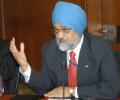
India should learn to live with high energy prices for rapid economic growth, said Planning Commission Deputy Chairman Montek Singh Ahluwalia after two of the state-owned oil companies hiked petrol rates this week.

According to police, CPI-M legislator K Bhimrao and other party supporters were arrested from Guindy railway station in Chennai.

Jet fuel or ATF price on Tuesday was hiked by a steep 8.5 per cent - the second increase in a month, while commercial cooking gas rate was cut by Rs 100 per cylinder in line with divergent trends in international benchmarks. Aviation turbine fuel (ATF) price was increased by 7,728.38 per kilolitre, or 8.5 per cent, in the national capital to Rs 98,508.26 per kl, according to a price notification of state-owned fuel retailers. Rates, which vary from state to state depending on the incidence of local sales tax or VAT, have been increased on firming up of global rates that followed four months of decline.
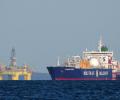
India, the world's third largest oil consuming and importing nation, spent 112.5 billion euro (about Rs 1.5 lakh crore) on buying crude oil from Russia since the start of the Ukraine war, a European think tank said on Thursday. The Centre for Research on Energy and Clean Air (CREA) released a report on payments to Russia for fossil fuels since February 24, 2022. "According to our estimates, since the beginning of the war, Russia earned EUR 835 billion in revenue from fossil fuel exports," it said.
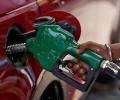
While consumers feel that petrol pinches directly, diesel hurts indirectly, as it is an input in almost all the goods and services we use.
The government is unlikely to take up the issue of reducing petrol, diesel and domestic LPG prices on Thursday as consultations on petroleum ministry's simultaneous proposal for freeing auto fuel pricing were not complete.
State-owned oil firms on Tuesday decreased retail selling price of petrol and diesel by up to Rs 1.08 and Rs 1.18 per litre, respectively, in step with the global softening of crude prices.
Centre and state governments are steadily increasing excise duties and value-added tax
After slamming the Centre for the steep hike in petrol price, West Bengal Chief Minister Mamata Banerjee on Saturday hit the streets in Kolkata, leading a massive protest march to put pressure on the United Progressive Alliance government for a roll-back. Banerjee, who was accompanied by Railway Minister Mukul Roy, party functionaries and thousands of Trinamool Congress workers, marched from Jadavpur to Hazra crossing, a distance of five km in south Kolkata.

The limited availability of flexible (flex)-fuel vehicles in the Indian market and the slow rollout of ethanol-blended petrol by oil-marketing companies (OMCs) remain major obstacles to achieving widespread use of biofuels in the transportation sector in India. Recently, two Union ministers have emphasised India's biofuel potential, arguing that it has the capacity and potential to lead a transition towards widespread biofuel adoption. Road Transport Minister Nitin Gadkari signalled that this transition is well underway and urged car manufacturers to quickly adapt and introduce new biofuel-run vehicles, lest the government resort to taxing diesel vehicles.
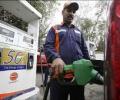
With vast disparity in fuel prices, the demand for diesel cars had reached upto 85 per cent and petrol cars had come down to 15 per cent, which otherwise usually remained at 50:50 per cent levels in India.
Diesel price hike is a tough decision and we need lot of tough decisions to get to 8 per cent growth rate," Planning Commission Deputy Chairman Montek Singh told reporters.
The petroleum ministry has proposed a Rs 3.25 per litre hike in petrol and about Rs 4 per litre increase in diesel prices in line with the spurt in global crude oil prices that have touched $66 a barrel.
Making a case for increasing prices of petroleum products and deregulating diesel prices, the Reserve Bank on Monday said these steps are necessary to contain fiscal slippages and arrest decline in growth.
The cabinet committee on economic affairs will meet this evening to decide on the prices of petrol, diesel, LPG and kerosene, petroleum minister Mani Shankar Aiyar said.

Oil marketing cos rightly passed on the burden to buyers.

Hardening prices of manufactured items during the month may refrain the Reserve Bank of India from cutting rates in its policy review on February 8.
Government earlier this month cut petrol price by Rs 5 a litre and diesel by Rs 2 per litre as crude oil prices dipped from an all-time high of $147 a barrel in July to under $45 a barrel. Even after the price cut, public sector oil firms were making a profit of Rs 9.98 on sale of every litre of petrol and Rs 1.03 per litre on diesel.
For the first time in the history of India, state-run oil firms on Saturday passed on the benefit of appreciating rupee value to consumers by way of a 10 paise per litre cut in petrol and diesel prices.
The government is unlikely to hike prices of petrol and diesel at the next revision due on August 31 despite the surge in crude oil prices.
Former Petroleum Minister and senior Bharatiya Janata Party leader Ram Naik on Wednesday flayed the Congress-led government for raising the LPG prices, saying the burden on the common man could have been avoided by cutting duties.
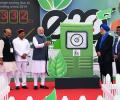
'We are not asking for incentives, but at least taxation can be aligned such that the rupee tax on consumers remains the same.'

The growing rift between MSIL and rival automakers has complicated the government's efforts to finalise the CAFE norms.
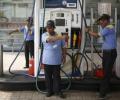
International oil prices have hit a six-month low, helping Indian fuel retailers breakeven on petrol but they continue to lose money on diesel - the most used fuel in the country, officials said. The world's best-known crude benchmark, Brent was trading at $94.91 per barrel on Thursday after concerns of a global recession led to it slipping to a six-month low of $91.51 on the previous day. The current rates are a relief to India, which is 85 per cent dependent on imports for meeting its oil needs.
Planning Commission Deputy Chairman Montek Singh Ahluwalia on Saturday strongly supported the view that petroleum prices in the country should "align with the global price."

BJP-ruled Maharashtra levies 46.52 per cent VAT (47.64 per cent in Mumbai) on petrol, the highest in the country.
The Bharatiya Janata Party on Tuesday announced country wide protest programme for two days beginning Wednesday against the hike in the prices of petroleum products.
Left parties on Monday opposed any increase in petrol and diesel prices in step with the hike in global oil prices and higher taxes, and asked the government to restructure duties to protect the consumers.

The government on Monday said it would not free diesel prices from its control in hurry as the move would lead to sharp rise in price of fuel most used in the transport sector.
The proposed move would lead to dismantling of the administered price mechanism.
Concerned over crude oil prices touching a record $64 a barrel in the international market, Petroleum Minister Mani Shankar Aiyar on Tuesday said the Cabinet will decide on raising domestic fuel prices in line with the spurt.
The government on Thursday decided not to increase petrol and diesel prices, and issue oil bonds worth Rs 23,457 crore (Rs 234.57 billion) to partly compensate public sector oil companies for the losses incurred on fuel sales."We have kept our promise of not raising prices of sensitive petroleum products," Petroleum Minister Murli Deora told PTI after a meeting of the Cabinet.
Prices of petrol and diesel will not be reduced immediately as oil companies continue to make losses even after the recent fall in international oil prices, Petroleum Minister Murli Deora said on Wednesday.
